
The DOE recently rescinded billions of dollars for projects intended to capture carbon dioxide emitted by power plants in the US. But things are different at sea, where global climate policies are pushing carbon capture technologies forward.
Earlier this year, the International Maritime Organization, a body that regulates international shipping, voted to impose a type of carbon tax on heavy ships, starting in 2028.
That’s good news for Calcarea, which is developing a system, based on technology developed at the California Institute of Technology, that captures carbon emissions from ships. Installing such a system could help shipping firms reduce their carbon tax.
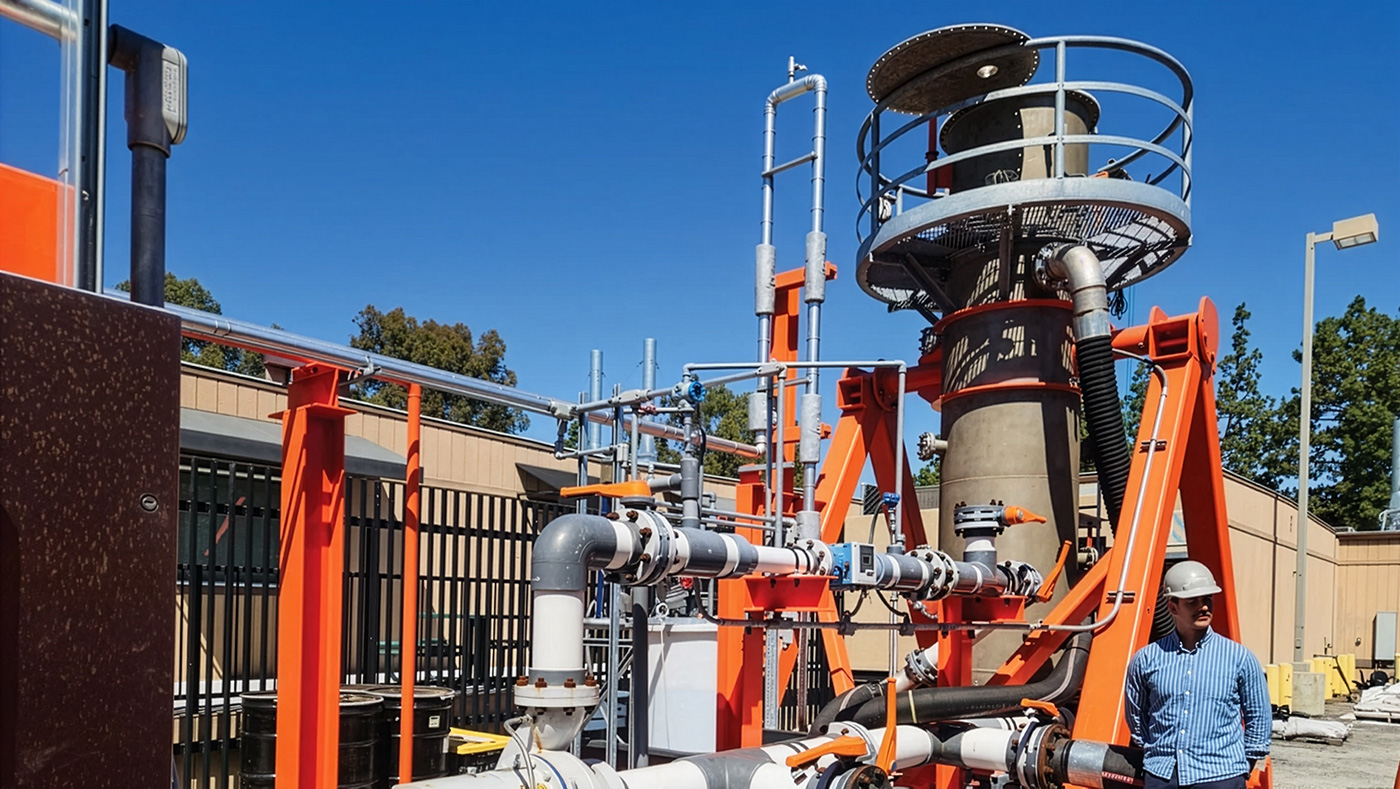
Calcarea’s technology sucks up seawater as a ship moves forward. CO2 emitted by ship engines is dissolved into the water, making it more acidic. Then, the system reacts the acidic seawater with calcium carbonate, which releases calcium and bicarbonate ions into the seawater. Dissolved there, the ions store the carbon for up to 100,000 years.
The technology can reduce a ship’s CO2 emissions by up to 50%, CEO Jess Adkins says. And leaving the carbon at sea means that ships don’t have to unload any carbon products when they reach a port.
Calcarea is building prototypes on land and is slated to install pilot carbon capture systems on a ship owned by the logistics company Lomar Shipping in 2026.