

Company continues its accelerated path towards net energy production via micro-fusion technology.
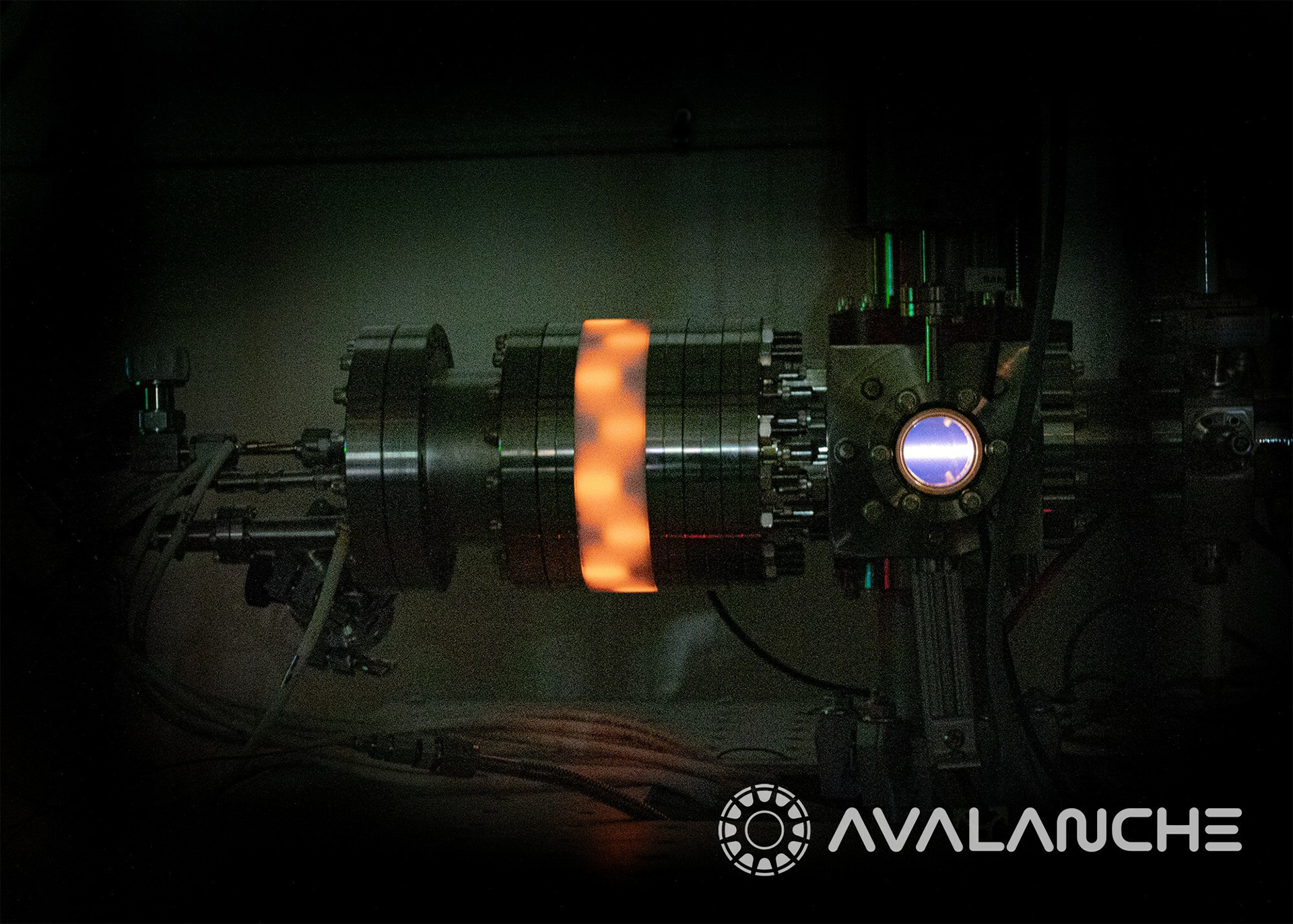
Avalanche Energy, a fusion energy startup developing modular fusion micro-reactors, today announced that it achieved a record of 200 kilovolts in its micro-fusion reactor and closed a $40M Series A round led by Lowercarbon Capital, with major participation from Founders Fund and Toyota Ventures. Also following on their Seed round investment are Congruent Ventures, Grantham Foundation and Clear Path. New participants also included Autodesk, MCJ Collective and the Climate Capital Syndicate. Avalanche recently operated their second prototype reactor at 200 kilovolts making it the highest known operating voltage of any fusion device since the University of Wisconsin at Madison produced 190 kilovolts in a 2006 experiment. The funding, which follows the company’s 2021 $5 million seed round led by Prime Impact Fund, will be used to continue the company’s accelerated work to test, develop and optimize its high-voltage orbitron prototypes, in addition to miniaturizing components critical to delivering a stand-alone, micro fusion reactor.
Avalanche Energy has been designing, building and testing micro-fusion reactors that are small enough to fit on a desk since 2021. The reactor’s small form factor enables rapid development cycles at relatively low cost – a revolution in the burgeoning nuclear fusion industry that has primarily pursued large fusion reactors that cost millions to billions of dollars and take many years to build and test. Since the company’s work began in June 2021, it has developed and operated two high-voltage reactor prototypes, achieving significant performance steps over the last 18 months. Avalanche’s technology has broad implications for energy independence and national security, opening the door to a wide range of applications, including carbon-free energy generation, advanced space propulsion, microgrids and transportation.